I am from a republic, so when I watch British period dramas, I am always confused as to who is on which rung of the aristocratic hierarchy ladder. Encyclopaedia Brittanica taught me this:
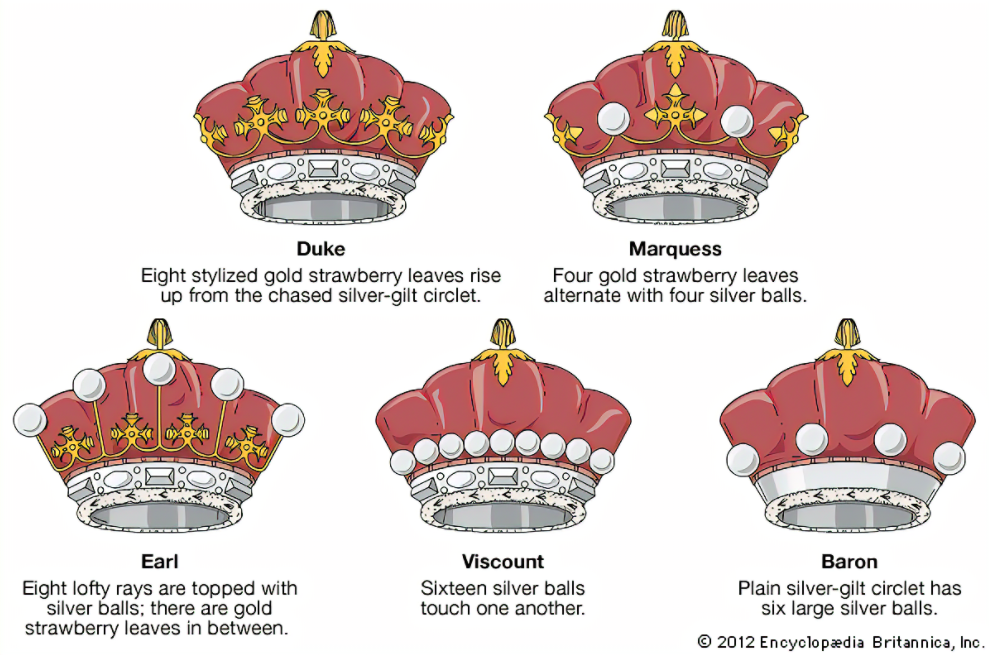
The British monarchy's rank order is
- monarch
- senior royals
- lesser royals
- peers and knights
The peerage is then split into five ranks:
- Duke (Duchess)
- Marquess (Marchionness)
- Earl (Countess)
- Viscount (viscountess)
- Baron (Baroness)
An Earl is higher in rank than a Lord.
Internationally, these ranks vary across countries and cultures, but normally it is:
- Emperor/Empress
- King/Queen
- Grand Duke/Grand Duchess
- Prince/Princess
- Duke/Duchess
- Marquess/Marchioness
- Earl/Countess
- Viscount/Viscountess
- Baron/Baroness
Life peerages are granted to honour individuals and they may vote in the House of Lords. But your peerage ends when you die.
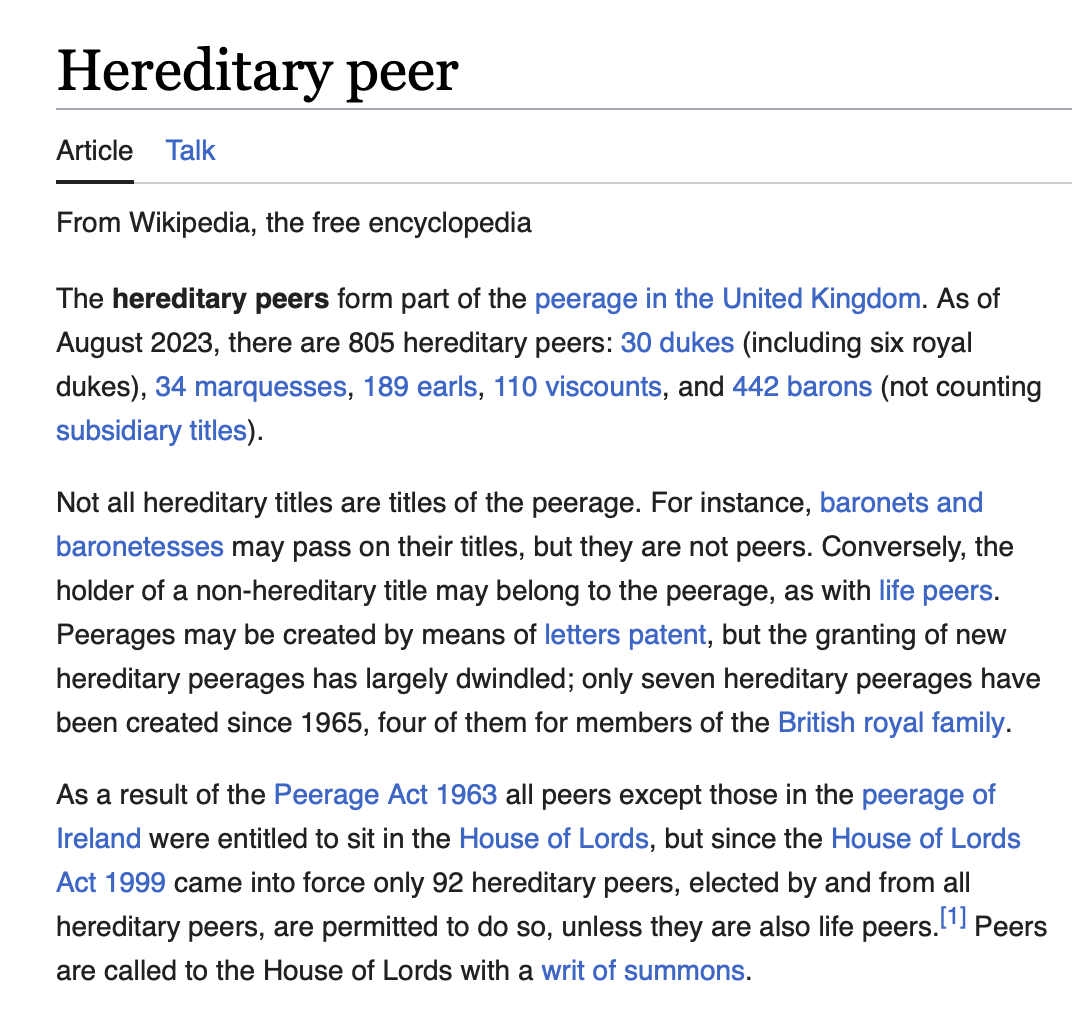
Wikipedia really confused me:
And when it comes to Queens
- Queen regnant – a queen who reigns in her own right. Equivalent in rank to a king.
- Queen regent – a guardian of a child monarch who reigns in their stead (either jointly – de jure, or alone – de facto) until the child comes of age
- Queen consort – wife of a reigning king. Equal to the king in rank but not in power. The male equivalent is usually Prince consort, although there have been some King consorts
- Queen dowager /Dowager Queen – the widow of a King
- Queen mother – a former Queen who is the mother of the reigning monarch


No comments:
Post a Comment