Gwendalyn's Books posted: " Hello Gracious Readers Thanks for Joining me and The Coffee Pot Book Club on tour with… Muskets and Minuets By Lindsey S. Fera May 30th - June 3rd Publication Date: 19th October 2021 Publisher: Zenith Publishing (an im" Gwendalyn's Books
Thanks for Joining me and The Coffee Pot Book Club on tour with…
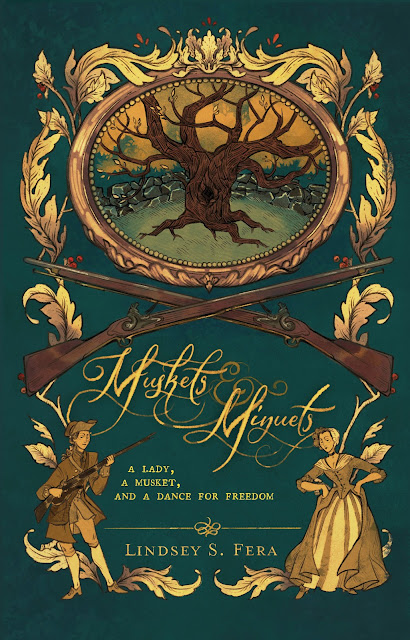
Muskets and Minuets By Lindsey S. Fera
May 30th - June 3rd
Publication Date: 19th October 2021
Publisher: Zenith Publishing (an imprint of GenZ Publishing)
Page Length: 486 Pages
Genre: Historical Fiction
SYNOPSIS
Love. Politics. War.
Amidst mounting tensions between the British crown and the American colonists of Boston, Annalisa Howlett struggles with her identity and purpose as a woman. Rather than concern herself with proper womanly duties, like learning to dance a minuet or chasing after the eligible and charming Jack Perkins, Annalisa prefers the company of her brother, George, and her beloved musket, Bixby. She intends to join the rebellion, but as complications in her personal life intensify, and the colonies inch closer to war with England, everything Annalisa thought about her world and womanhood are transformed forever.
Join Annalisa on her journey to discover what it truly means to be a woman in the 18th century, all set against the backdrop of some of the most pivotal moments in American history.
A born and bred New Englander, Lindsey hails from the North Shore of Boston. A member of the Topsfield Historical Society and the Historical Novel Society, she forged her love for writing with her intrigue for colonial America by writing her debut novel, Muskets and Minuets. When she's not attending historical reenactments or spouting off facts about Boston, she's nursing patients back to health in the ICU.Social
May 30thThe Coffee Pot Book ClubBrook's JournalThe Historical Fiction CompanyViviana Mackade's Official BlogMay 31stB for BookreviewBooks & BenchesCandlelight ReadingArchaeolibrarianCelticLady's ReviewsJune 1stRuins & ReadingLet Your Words Shine…Gwendalyn's BooksLinnea Tanner's Official BlogJune 2ndCrowvus Book BlogThe Historical Fiction BlogMJ Porter's Official BlogOh look, another book!Paul Walker's Official BlogJune 3rdHistorical Fiction ReviewsLet Us Talk of Many ThingsThe Books DelightJudith Arnopp's Official BlogA Thousand Suns
leslie posted: "It is important if you are an artist to have an open minded curiosity about the world, people, places, and especially your art. The minute you stop being curious is the moment you start to stagnate. My curiosity leads me down many paths. I like to learn a" Comfortable Shoes Studio
It is important if you are an artist to have an open minded curiosity about the world, people, places, and especially your art. The minute you stop being curious is the moment you start to stagnate. My curiosity leads me down many paths. I like to learn about things unrelated to art and creativity but I also will do deep dives into specific artmaking activities.
Like gelli/gel/gelatin printing.
I've been watching every Yeates Makes video available. (And you should too!) Unlike many YouTubers he does everything DIY style- his own masks, stencils, and transfers. You won't be surprised to find out that his DIY artsy aesthetic matches mine.
I'm a strong believer in the idea that commercial stencils and tid bits are there to jumpstart you. Sadly, I see a great deal of people getting locked into the use of commercial materials. I say sadly because the goal of every instructor should be to help the artists in their classes unlock and discover their creativity. * When an instructor gets bogged down and locked into the use of ONLY commercial materials through contracts and sales of said materials, well. I have some thoughts but this post isn't about that.
It's about the idea of systematically exploring a material.
One of the things I miss about my (some) old college classes was the idea that you should explore the materials completely.
This brings me back to gelli/gel/gelatin printing. I really want to know everything these plates will do when I use them, how far can I push them? And most importantly, what materials and tools will work with them to ensure my success when I do have an idea?
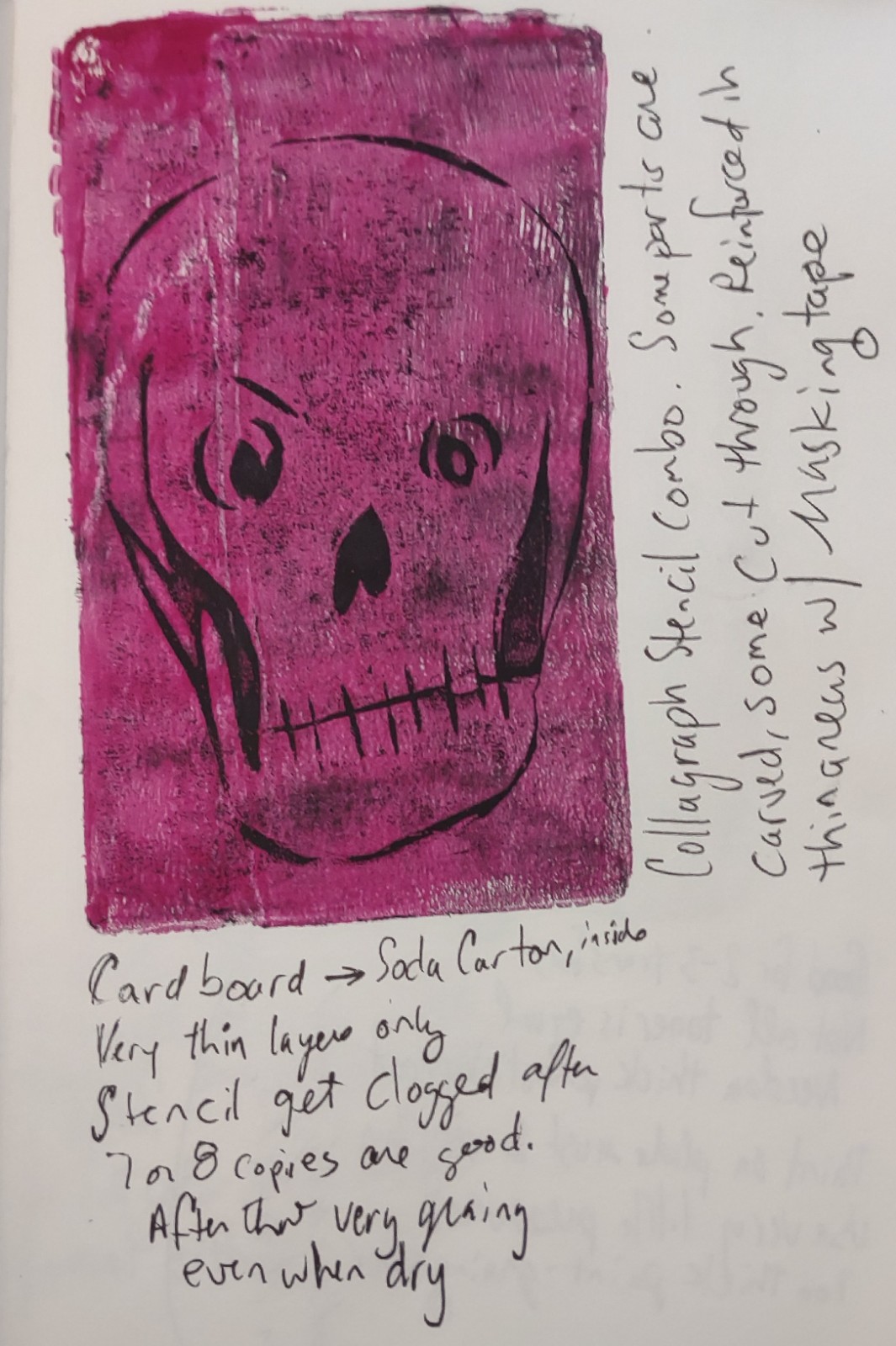
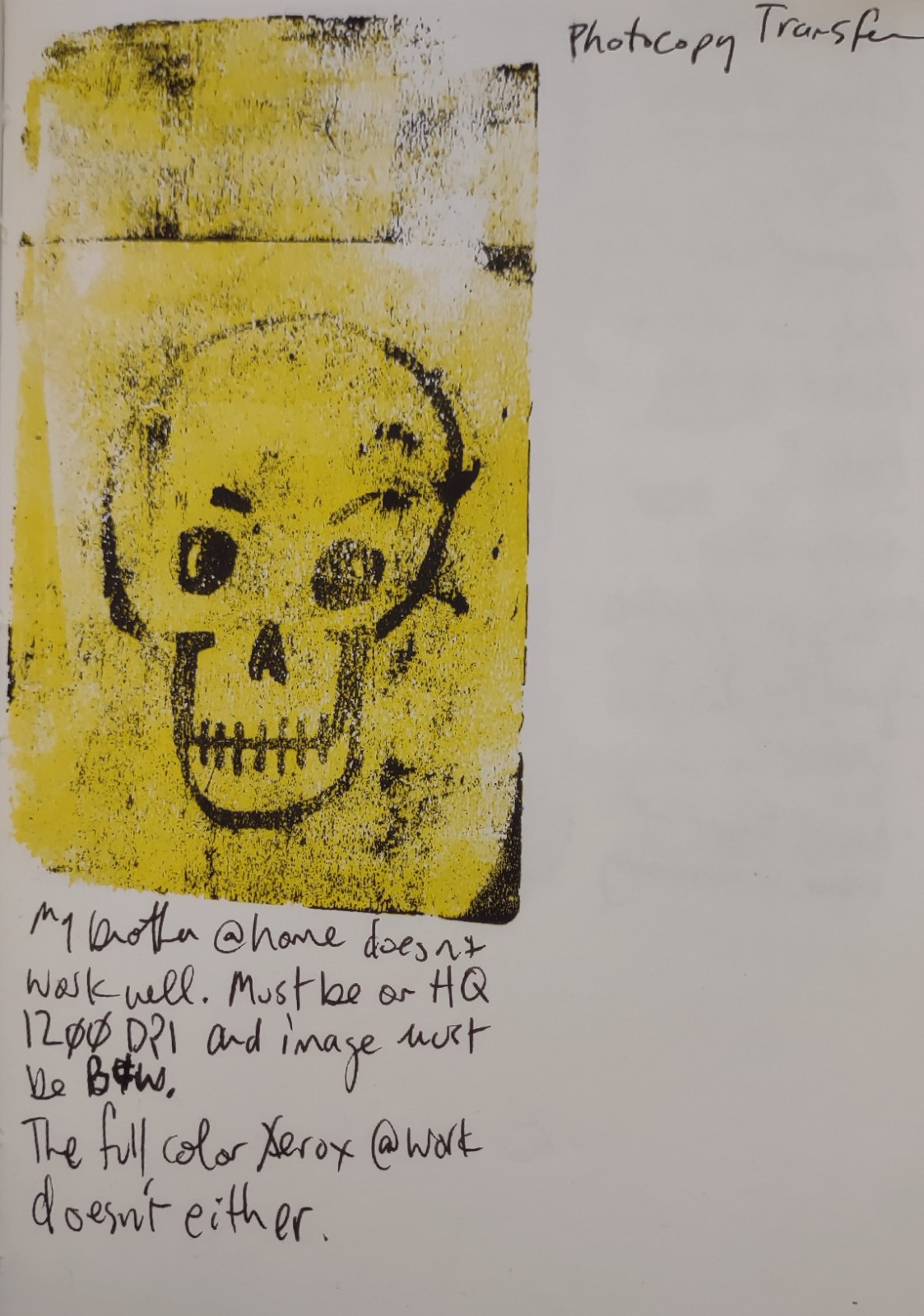
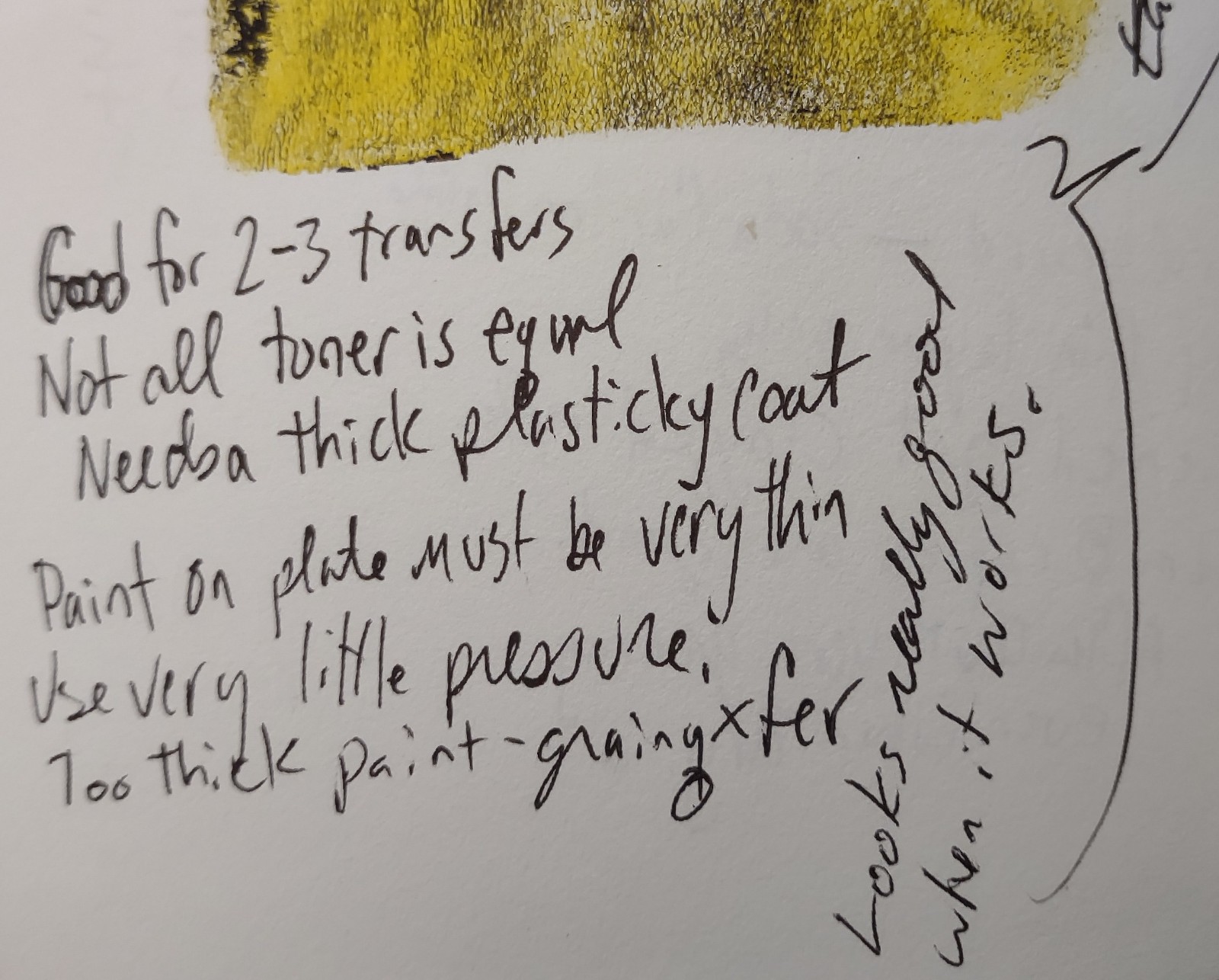
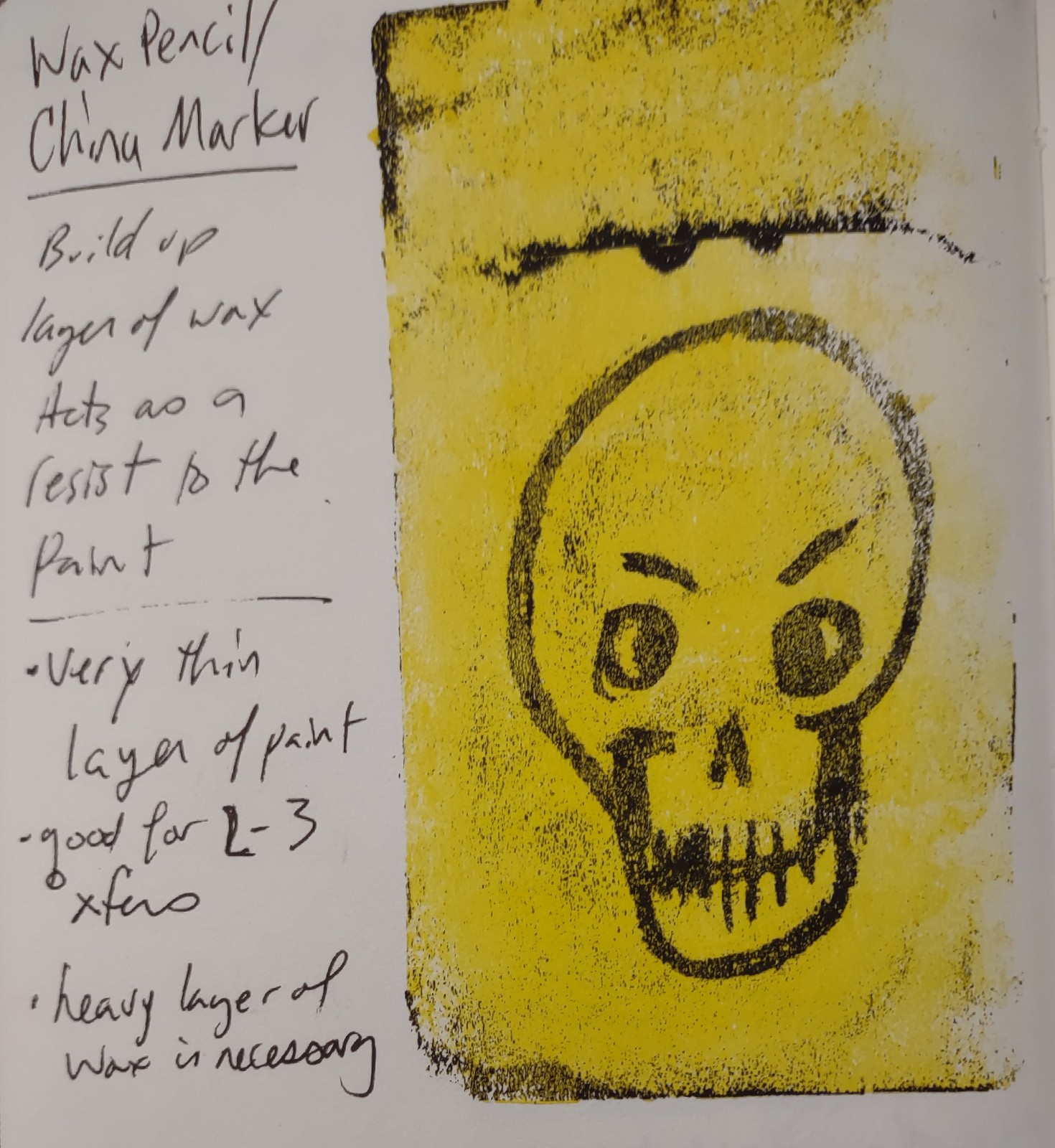
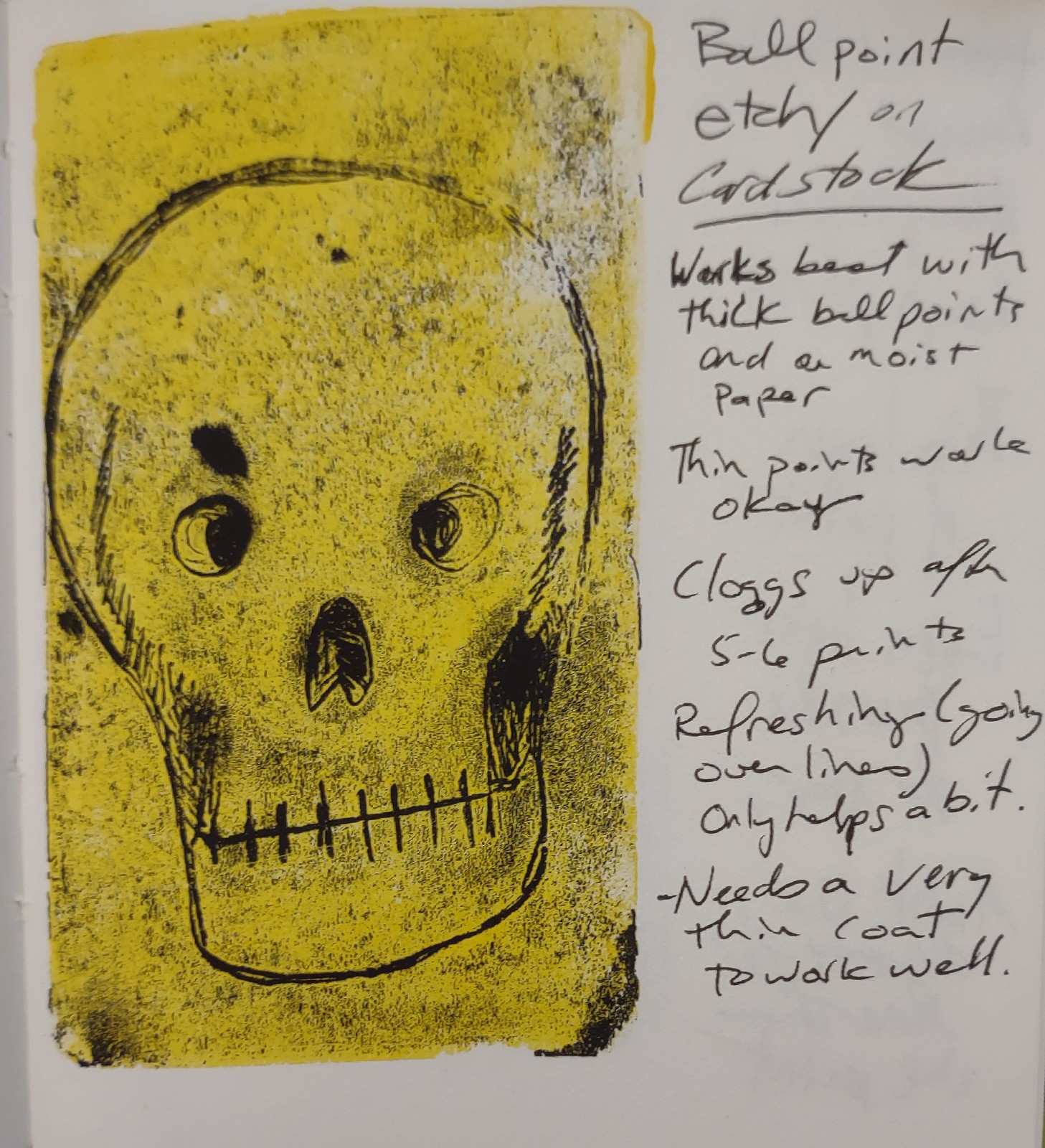
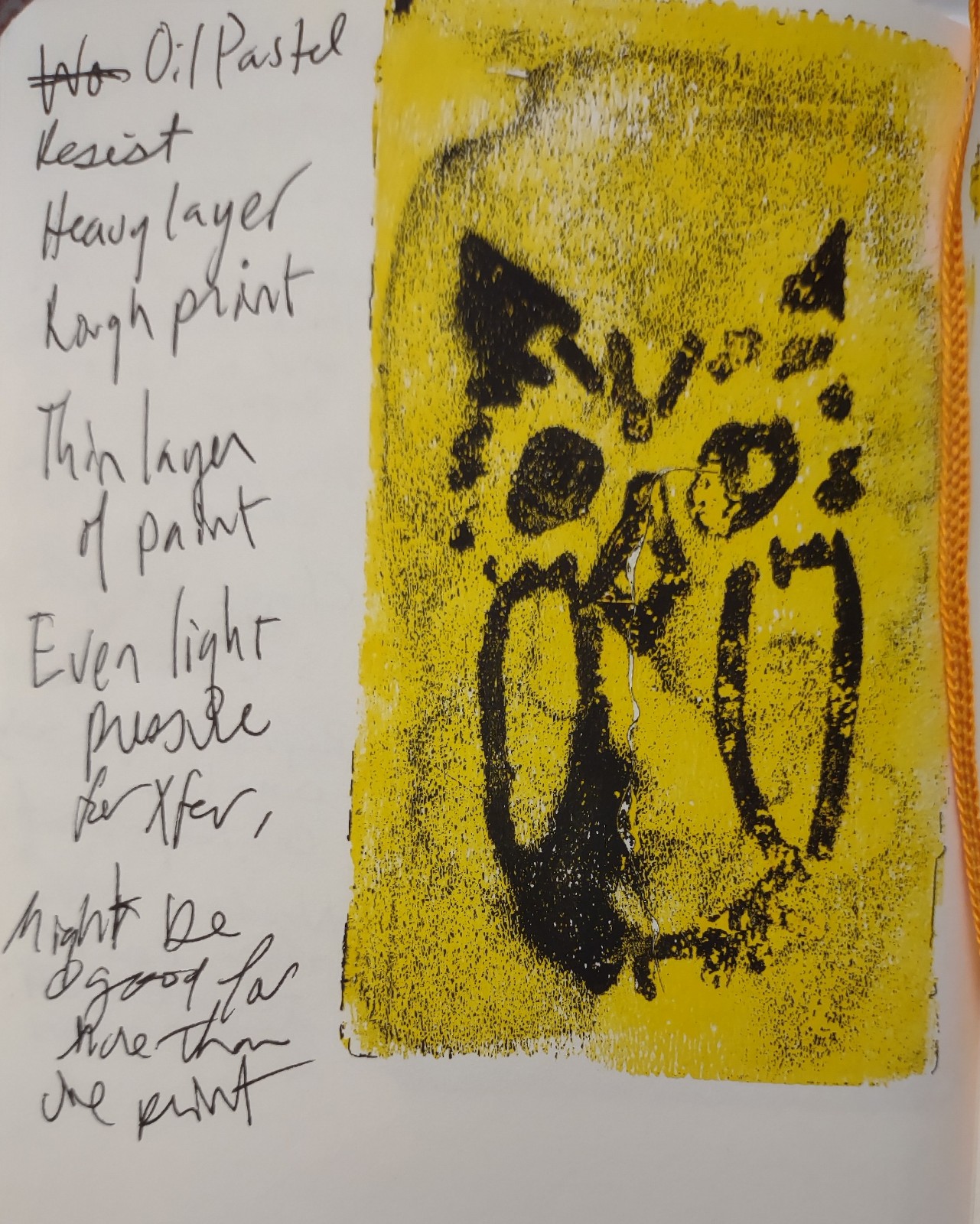
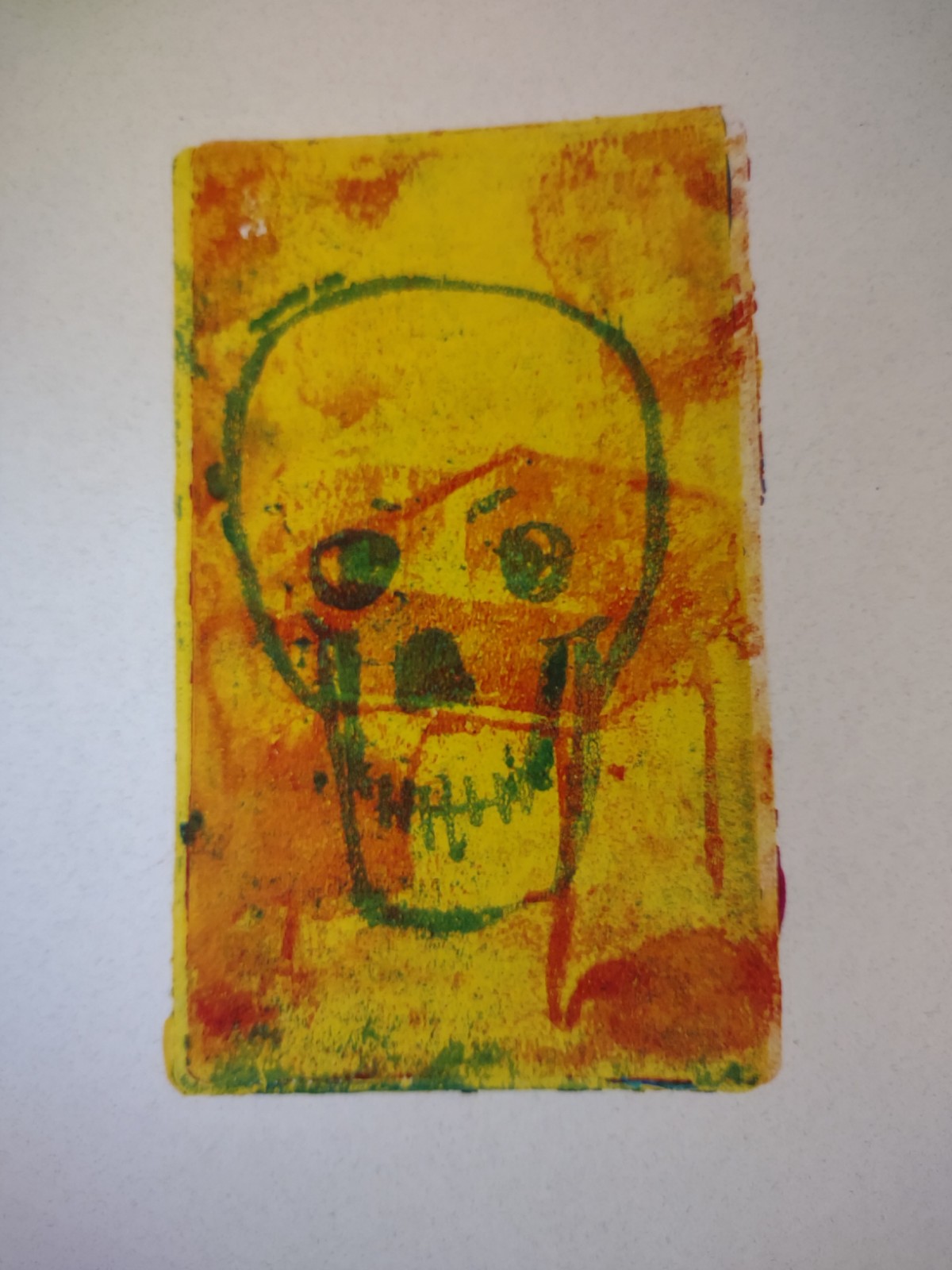
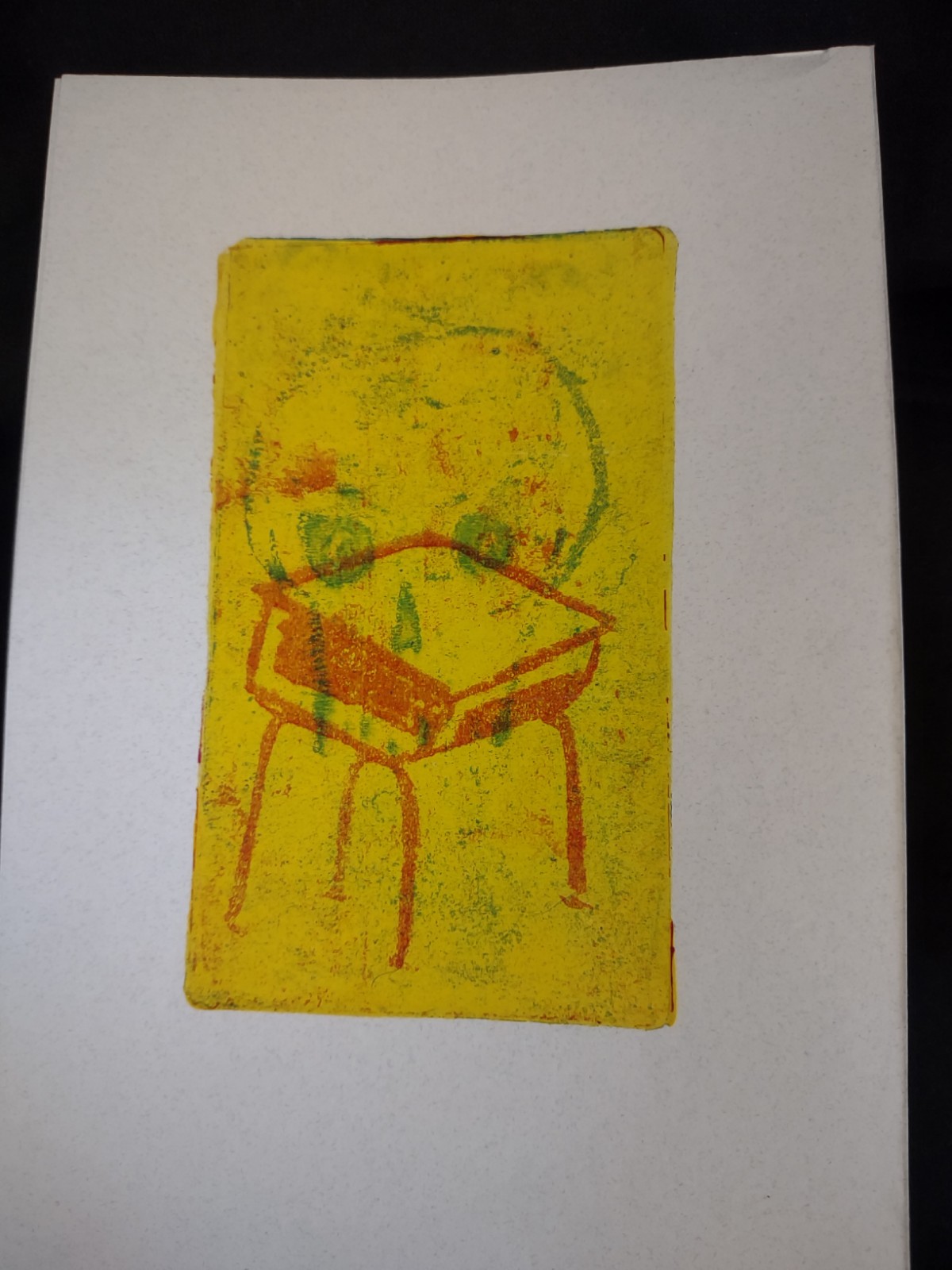
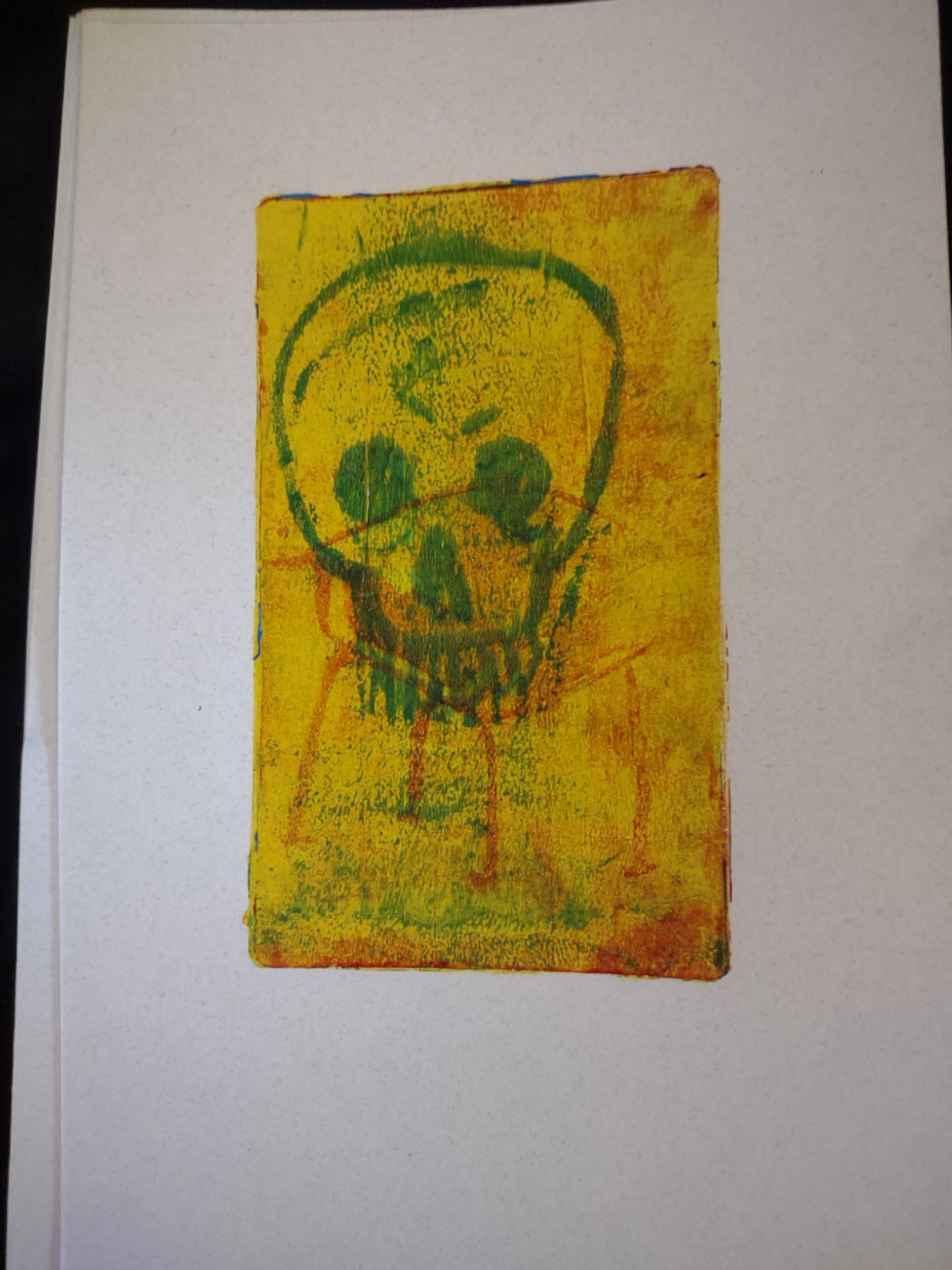
I picked up a 3x5 inch gel press awhile back, this creates a perfectly sized print on half a US letter sized sheet of paper. It's also a perfect size for testing. It fits into my 6x9 sketchbook pretty well, and leaves room for notes. Perfect. I gave myself a few hours with the various materials and filled a few pages in my sketchbook. Below are a few pictures and my notes.
Let yourself play and explore all the materials you have around you, you never know what you'll stumble onto that just WORKS for you and your style.
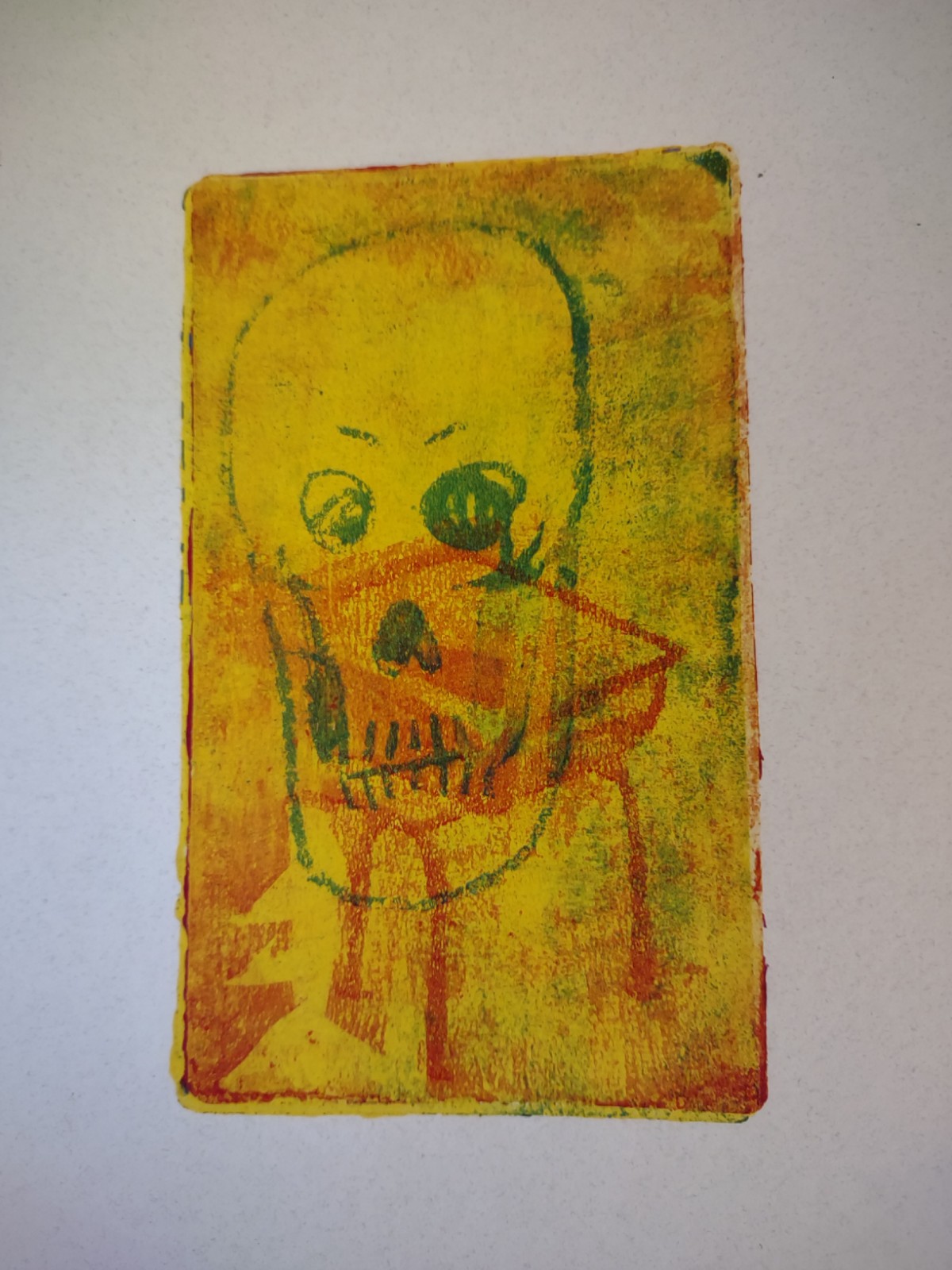
Some of these techniques were used in creating this art for my ko-fi supporter packs:
LCantoni posted: " Film historians disagree on who invented the first movie camera - Louis Le Prince, who made a short film in 1888 and then disappeared before he could exhibit his new invention? Thomas Edison, who allegedly stole credit for an employee's invention in " Hot off the Press
Film historians disagree on who invented the first movie camera - Louis Le Prince, who made a short film in 1888 and then disappeared before he could exhibit his new invention? Thomas Edison, who allegedly stole credit for an employee's invention in 1892? But one thing is certain: "moving pictures" radically changed the face of entertainment worldwide. By 1914, technical developments had brought movies from short clips of only a few minutes to compelling narratives lasting an hour or more. Audiences flocked to "dream palaces" to be immersed in romance, comedy, suspense, and adventure on the silver screen. But few understood how exactly these "dreams" got there.
In Moving Pictures: How They Are Made and Worked (1914), author Frederick A. Talbot explains to a general audience the technical aspects of film-making as then known. Talbot wrote a number of similar books on railways, lighthouses, airplanes, and "waste reclamation" (an early term for recycling). He also followed his Moving Pictures book with one on cinematography for amateurs.
Moving Pictures begins with a lengthy history of "animated photography" that, not surprisingly, omits the vanished Le Prince and mainly focuses on Edison, who was not just a talented inventor but also a very shrewd businessman. The book also duly credits the Lumière Brothers, Robert Paul, George Eastman, and others with important advances in camera, film, and projection processes.
Talbot's book is chock full of photos of devices, laboratories, studios, and film sets. We learn how celluloid - the old, flammable, perishable medium for film - was made from a chemical soup known as "dope." There are chapters on how perforated film was developed to move film through the camera quickly, how film cameras worked, how film was developed, and how moving images were projected onto a screen. He explores the technical aspects of filming major events and natural processes, the creation of what were later called newsreels, and even the possibility of home movies.
We also learn how films were staged in the studio. Talbot tells us that Edison's tiny "Black Maria," built in 1892 and believed to be the world's first film studio, had become a gigantic glass building by 1914, with a 2,400-square-foot stage and a 130,000-gallon water tank for "aquatic spectacles." But film producers without such resources also knew how to answer when opportunity knocked. Talbot recounts how one producer, hearing of a huge fire in a Los Angeles department store, sped a film crew to the scene. They somehow persuaded the fire department to let the lead actor, costumed as a fireman, rush into the still-burning building to "rescue" an actress who was set in an upper window screaming for help. "The players ran great risks," says Talbot, "but the film producer was satisfied."
Talbot also pointed out the special problems presented by narrative films. We may find the exaggerated expressions and gestures of silent movies laughably quaint today, but the primitive medium of the time made them vitally necessary, as Talbot explains:
The stage management of a play before the celluloid film is far more exacting than the staging of a play behind the footlights. . . . The picture play is essentially pantomime and the camera is a searching, unequivocal critic. It produces a stern, matter-of-fact representation of what is enacted before it. There is no dialogue to conceal blemishes, or mitigate the deficiencies of the actors and actresses. Words have to be converted into action and gestures.
Although "talking pictures" were still 13 years in the future, Talbot has a chapter on early attempts to make sound films. But he didn't think much of them. "[U]ntil the peculiar nasal sound is eliminated from the talking machine it will not prove popular. . . . [T]he majority of picture-theatre lovers, after the first wave of excitement and curiosity, will patronise those establishments where they can see movement alone." One wonders what he would have made of today's ultra-realistic Dolby sound systems. Talbot also bemoans the failure of attempts to make true-color films, which had begun as early as the 19th Century.
The six chapters on trick cinematography are especially fascinating, showing how early filmmakers thought outside the box to enthrall audiences with special effects - all created without the aid of a computer. Stop-motion photography, double-exposure, miniature models, invisible wires, and other devices, some still in use today, were all invented at this period. Camera tricks to make people look gigantic or tiny - in the 21st Century used to very great effect in Peter Jackson's The Lord of the Rings films - also dated from this time. One interesting, if sad, example of a film trick known as "stop and substitution" involved a real-life "legless cripple," as Talbot calls him, who was paid to be a stunt-double in a French film about a car accident. A character played by the lead actor gets his legs severed by a car. The legless double, with fake severed legs, substitutes for the actor. The legs are then miraculously reattached by a passing doctor, the actor now substituting for the double. Talbot surmised, "Probably the unfortunate had never before found his misfortune so profitable to him."
Film preservation was of great concern to Talbot, but he was fatalistic about it because of
the perishable character of the celluloid film, and also of the photographic image upon the emulsion. Both would deteriorate, even if preserved in hermetically sealed cases, with the flight of time, and the chances are if a film were held for one hundred years that it would be found useless when opened at the end of that period.
Talbot stays entirely on-topic in his discussion of the technical side of movie-making. You won't find gossipy references to the top movie stars of the day, like Mary Pickford. But you will marvel at how early filmmakers developed the very equipment and techniques that still keep us entertained over a century later.
This post was contributed by Linda Cantoni, a Distributed Proofreaders volunteer.